
About the Project
Why Mobility First exists.
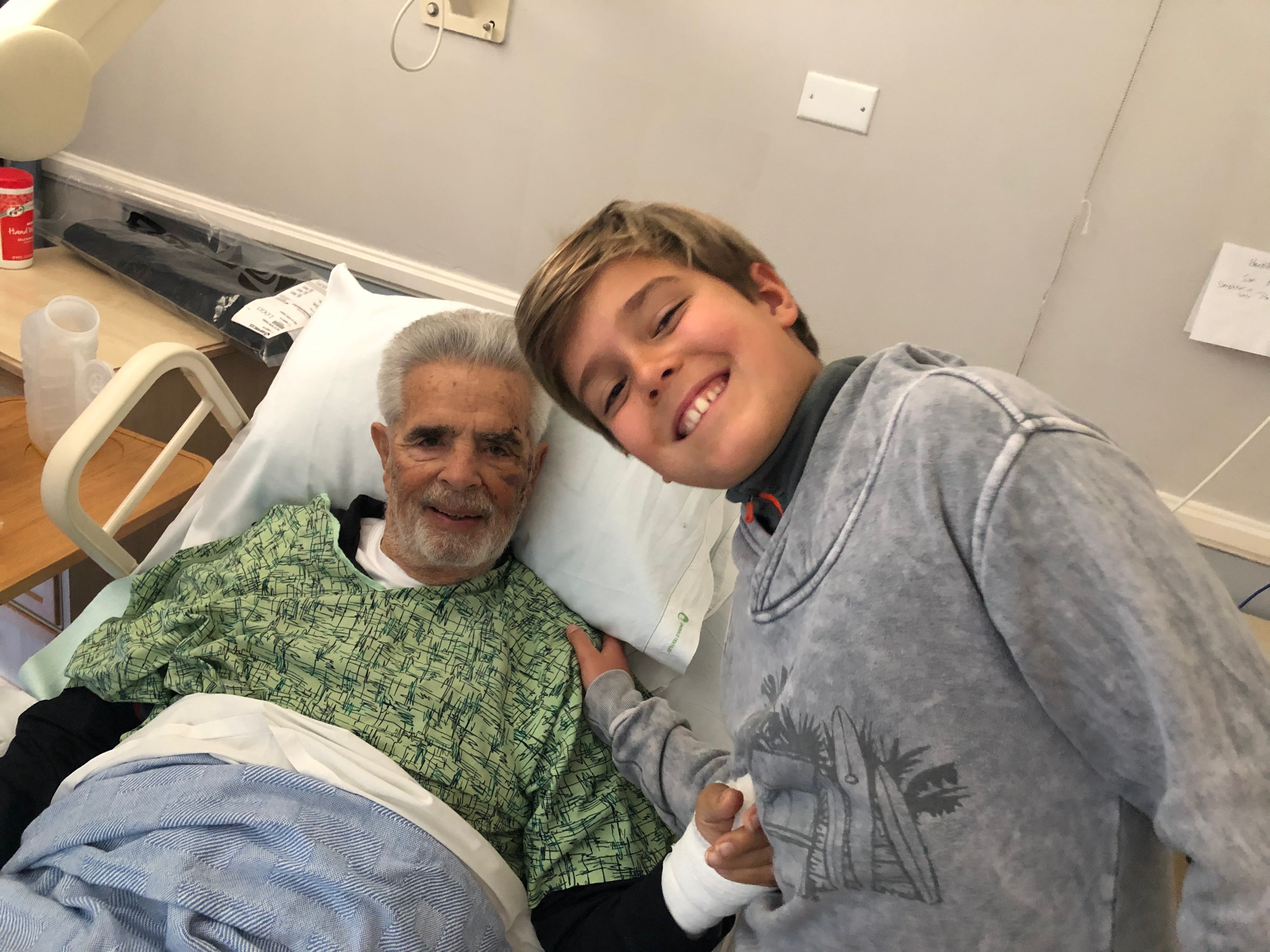
Visiting my grandfather during his rehabilitation. He broke his tibia after tripping on a rock near the marina where he lived.
My grandfather was one of the most active people I knew.
He lived on a boat and walked the dock and throughout the marina every single day. He was happy, social, and deeply connected to his community — always around people, always with a role to play.
Then one day, an unexpected rock on the path changed everything. He tripped, fell, and broke his tibia. The doctors believed it was best to let it heal on its own — rest, no surgery, no fixation. And so he waited. For three months, he couldn't walk.
"Seeing him in the nursing home was hard. I could watch his health and fitness declining every single day."
The mental side declined too. Without movement in his daily life, the person I knew began to disappear. The bone eventually healed — but he was never the same. The formerly active, outgoing grandfather I knew was replaced by someone who looked and acted much older, and who was no longer willing to exercise or engage the way he once had.
I didn't know at the time that there was a surgical option that could have allowed him to walk the next day. I didn't know to ask. Nobody told us to ask.
That's why Mobility First exists — so that the next family in that waiting room knows exactly what questions to ask.
Our Mission
We are not here to recommend surgery over non-surgical care.
Every fracture is different. Every patient is different. Treatment decisions are complex and deeply personal — and they should always be made in close consultation with qualified orthopedic surgeons and healthcare professionals.
What we believe is this: families deserve to understand every available treatment option. They deserve to ask informed questions about how those options may affect mobility, independence, and quality of life. And they deserve to have those questions answered.
Sometimes the answer is that surgery isn't appropriate. Sometimes it is. But knowing to ask — and knowing what to ask — may make all the difference.
Medical Disclaimer
This site is for educational purposes only. The information provided is not a substitute for professional medical advice, diagnosis, or treatment. Always seek the advice of your physician or other qualified health provider with any questions you may have regarding a medical condition. Treatment decisions should always be made in consultation with qualified orthopedic surgeons and healthcare professionals.